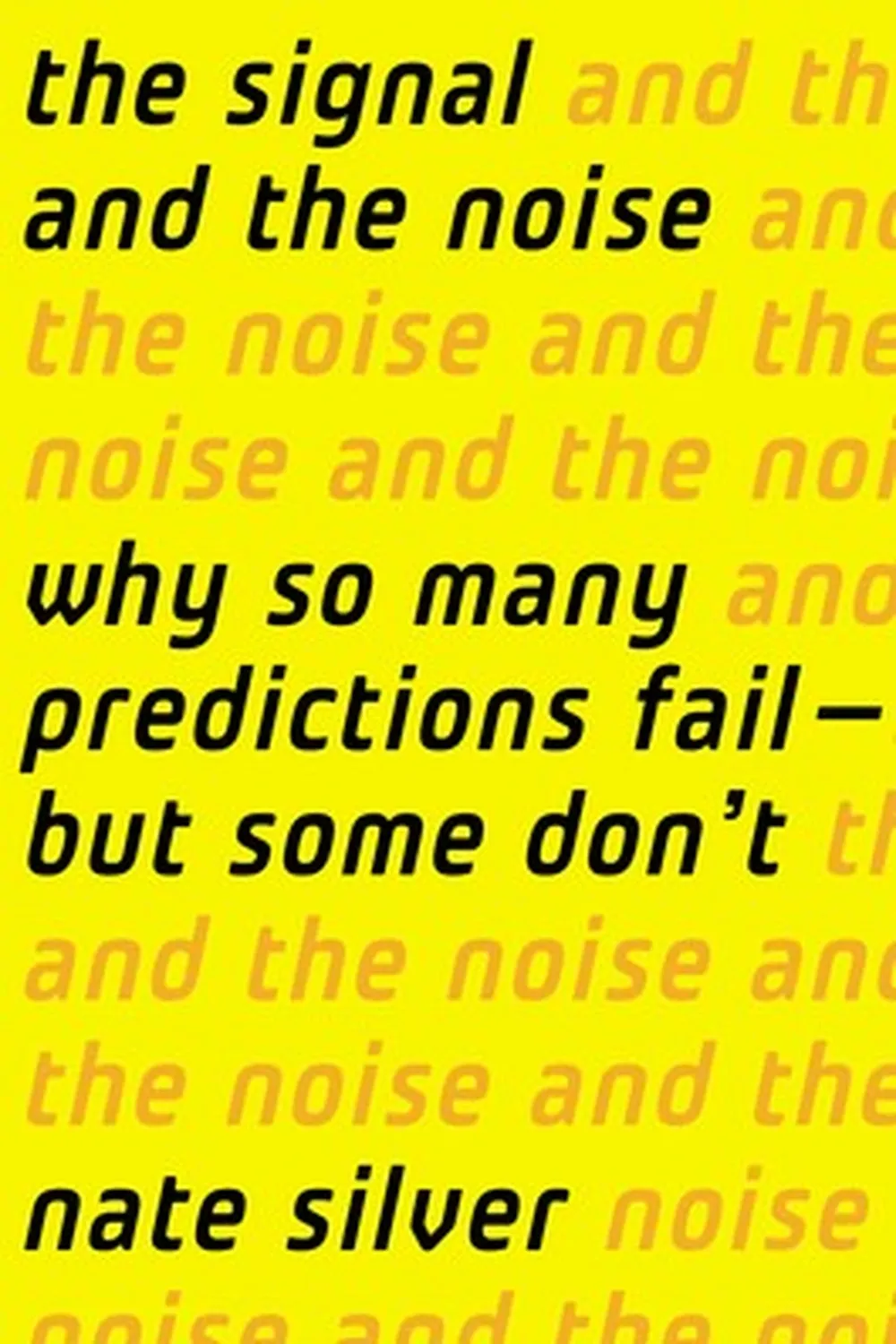
The Signal and the Noise Review
The Signal and the Noise by Nate Silver is a guide to thinking in probabilities. It dissects why forecasts fail and how to build better ones through Bayesian updating, calibration, and humility about uncertainty.
Overview
Domains include elections, economics, weather, earthquakes, sports, and disease. Each chapter contrasts noisy data and overconfident models with approaches that track reality: base rates, priors, simple-but-strong features, and transparent evaluation.
Summary
Silver shows how to start with prior beliefs, incorporate new evidence, and adjust credences incrementally. He critiques overfitting, data snooping, and mis-specified models, then highlights successes where incentives and feedback are healthy: meteorology and poker. Calibration and sharpness matter: probabilities should match frequencies and still be informative.
Authors
Nate Silver writes as a practitioner. Examples are concrete, methods are explained without heavy math, and errors are owned.
Key Themes
Probabilistic thinking over point predictions; priors and base rates; humility and continual updating; incentives and feedback loops that reward accuracy.
Strengths and Weaknesses
Strengths: clear Bayesian intuition, cross-domain cases, and emphasis on calibration. Weaknesses: limited technical depth and quickly dated specifics in politics and markets. The mental model endures.
Target Audience
Analysts, journalists, managers, and curious readers who need to interpret or produce forecasts.
Favorite Ideas
Calibration curves as truth serum; separating model complexity from accuracy; betting markets and weather services as accountability systems.
Takeaways
Treat predictions as bets with odds. Start with base rates, update with evidence, measure calibration, and resist confident stories that lack quantified uncertainty.